
Dogs turn up in fiction more often than almost any other animal and are written well about a tenth of the time. The good ones have a job in the book: they know something the humans do not, or they cost somebody something. These twelve do.
Editor's Picks
- Argos, in the Odyssey - six lines, and still unbeaten
- Montmorency - the funniest dog in English
- The Hound of the Baskervilles - the one everybody misremembers
What makes a good fictional dog
The bad ones are furniture. They are present so the reader knows the household is a warm one, they appear when convenient, and nothing in the plot would change if you cut them.
The good ones are doing something. Four tests separate one from the other, and every book below passes at least three of them.
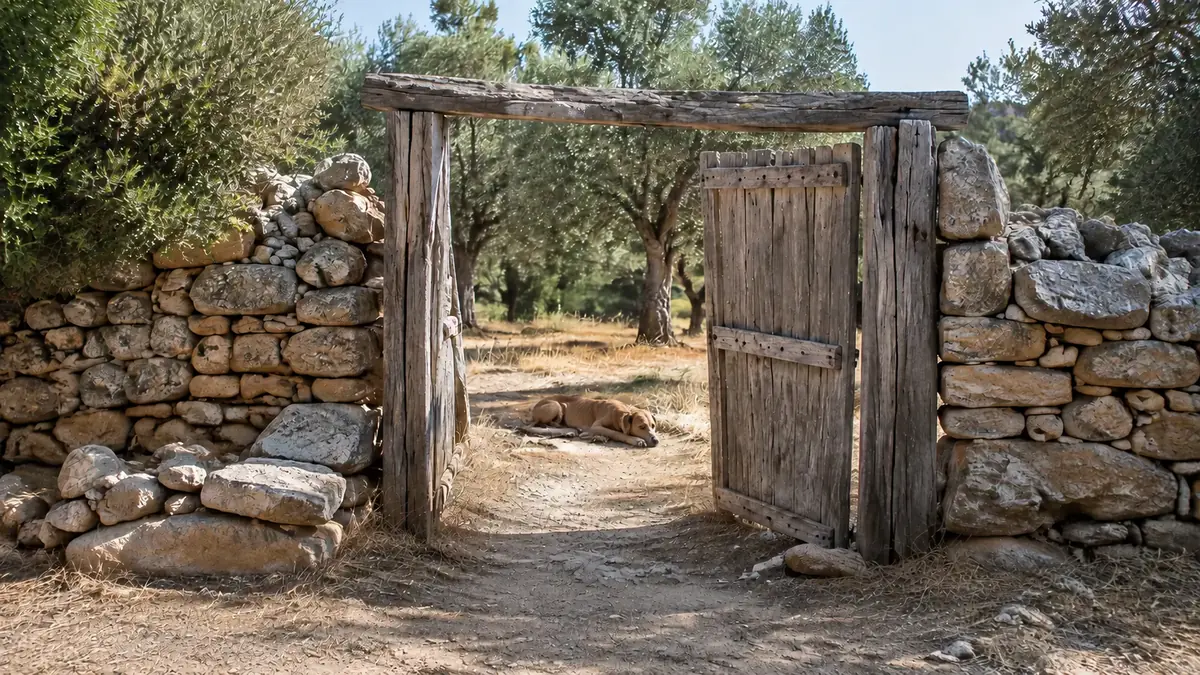
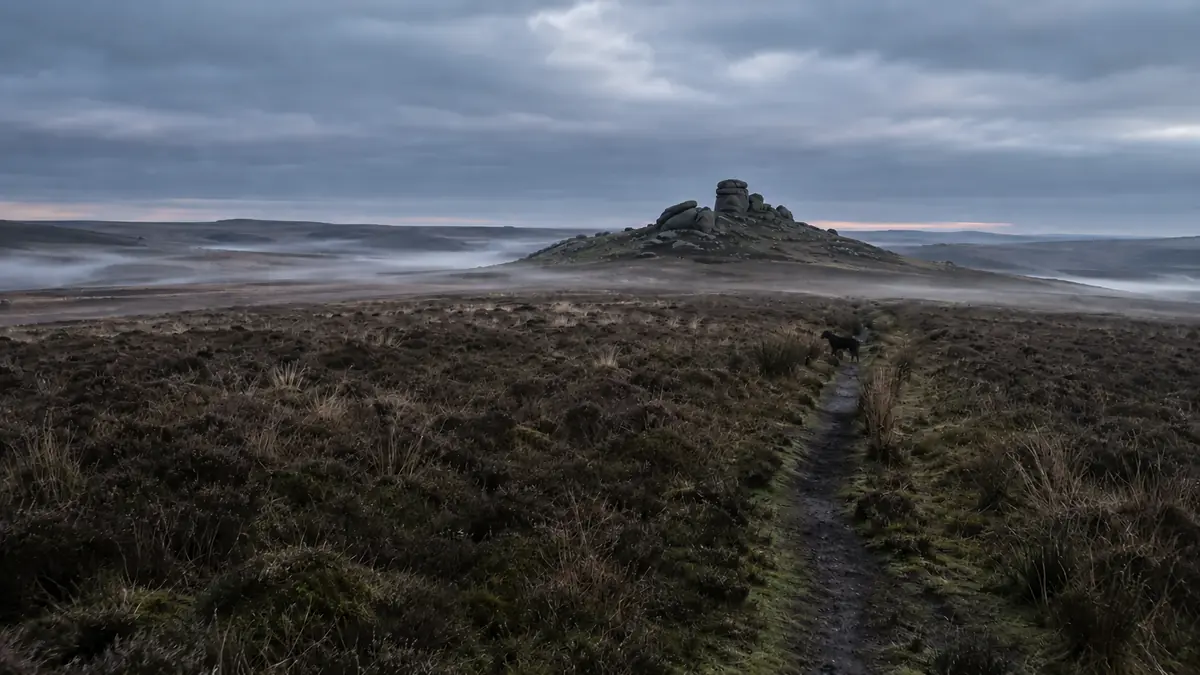
A dusty courtyard gate on Ithaca and a Dartmoor tor at last light: the oldest dog in Western literature and the most famous one in English, three thousand years apart.
It knows something the humans do not
Argos identifies Odysseus when no one else on Ithaca can. Bullseye is the thing that finally betrays Sikes. Toby follows a creosote trail across South London because Holmes, for once, cannot.
The dog holds information the plot needs. Cut the animal and the book stops working.
It costs somebody something
Buck is stolen and sold. Lassie is sold because a family cannot feed her. Nana is dismissed from the nursery, and the children are gone the same night.
The dog is attached to a decision somebody made and did not want to make. That is what gives it weight rather than warmth.
The author does not translate it
Burnford refuses to tell you what her animals are thinking. Homer gives Argos six lines. London stays outside Buck's head almost entirely, describing what he does rather than what he feels.
The moment a writer starts narrating the inner life, the dog stops being a dog and becomes a short person in a fur coat.
It is not only there to be loved
Dickens never lets you like Bullseye. King makes Cujo pitiable rather than evil. Woolf treats Flush as a subject with a life rather than as somebody's pet.
A dog that is only ever adored is not in a story. It is in a photograph.
Why so many of them die
It is the first thing anyone notices about dog books and it is not an accident. Argos dies in the line after he recognises Odysseus. Bullseye goes off a roof. Cujo has to. Lassie survives and very nearly does not, and Old Yeller, which is not on this list, has ruined more childhoods than any book has a right to.
The mechanical reason is that a dog's life is roughly a seventh of ours, so any story told across a human span has to end one way. The better reason is that it is the cheapest available route to an emotional response, and a great many writers take it because it works even when nothing else in the book does.
The ones that resist it
Which is why the restrained examples stand out. Jerome never threatens Montmorency. Woolf gives Flush a whole life and treats the ending as biography rather than tragedy. Burnford gets three animals across two hundred miles of bush and refuses to sacrifice one for effect.
Homer, oddly, does both at once. Argos dies immediately, but in six lines and without a word of comment, and it lands harder than twenty pages of a modern novel working towards the same moment.
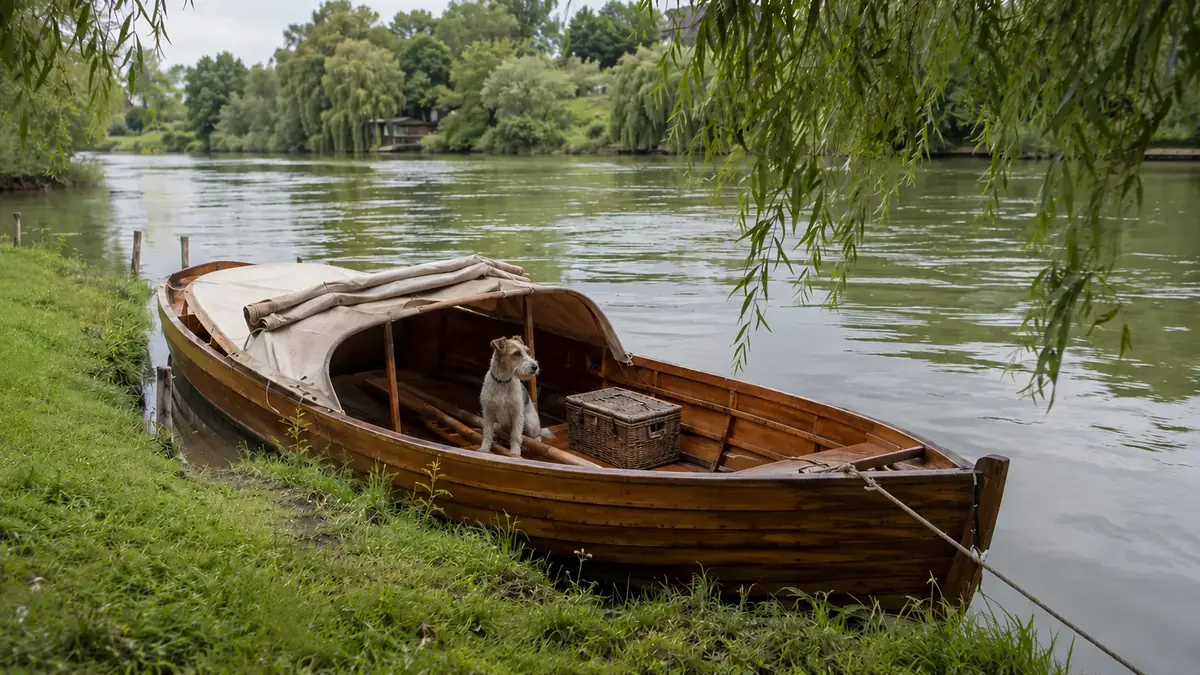
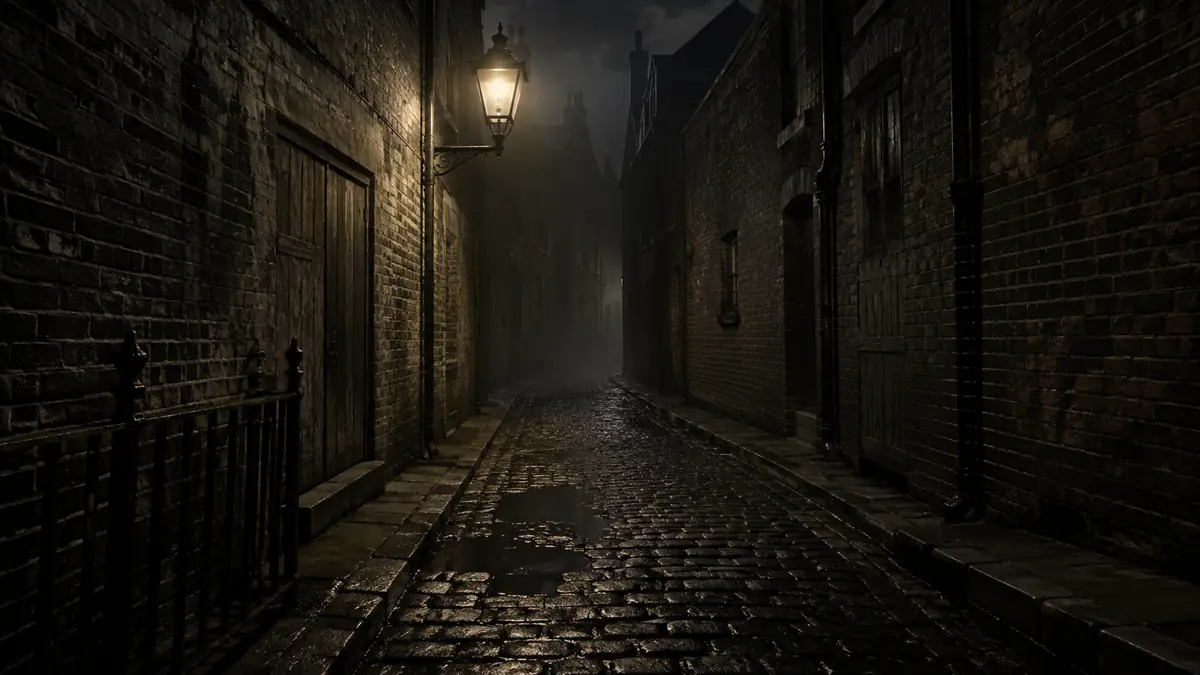
A Thames skiff at Sonning and a gaslit London alley. The Victorian and Edwardian dogs split neatly between comedy and menace, and Jerome and Dickens take one each.
 01
01The Hound of the Baskervilles
The dog everybody can name and almost nobody can describe. Doyle is precise about it: "not a pure bloodhound and it was not a pure mastiff; but it appeared to be a combination of the two". Stapleton even buys it in London, from Ross and Mangles, dealers in Fulham Road. A hoax with phosphorus on its muzzle, and still the best thing Doyle wrote.
 02
02The Odyssey
Argos, lying on a dung heap, riddled with fleas, twenty years old and the only one in Ithaca who knows Odysseus at once. He manages a tail wag and then dies. Six lines, and nobody in three thousand years has written a better dog.
 03
03Three Men in a Boat
Montmorency the fox terrier, whose ambition in life is to get in the way and start a fight, and who is treated throughout as the fourth man rather than the pet. Still the funniest book in English about a river.
 04
04The Call of the Wild
Buck, stolen from a Californian lawn and sold into the Klondike, working backwards from house dog to something older. Short, brutal and unsentimental in a way that dog books almost never are.
 05
05Oliver Twist
Bullseye follows Bill Sikes everywhere, is beaten constantly, and will not leave. Dickens never lets you like him and never lets you forget him, and the dog is the thing that finally gives Sikes away.
 06
06Peter Pan
Nana is a Newfoundland employed as a nursemaid, kennelled in the nursery and treated by the Darlings as staff. The joke is funny for about a page and then quietly becomes the saddest thing in the book.
 07
07The Sign of the Four
Toby, the dog Holmes borrows to follow a creosote trail across London: "an ugly, long-haired, lop-eared creature, half spaniel and half lurcher, brown-and-white in colour, with a very clumsy waddling gait", in the full text at Project Gutenberg. The description most people are half-remembering when they picture a basset.
 08
08Flush
A full biography of Elizabeth Barrett Browning's cocker spaniel, written entirely straight, in which Wimpole Street and Florence are rendered as a world of smells. A joke that turns into one of Woolf's most likeable books.
 09
09Lassie Come-Home
Sold by a Yorkshire family who cannot afford to keep her, and walking back from Scotland. Before the films flattened it, this was a hard novel about poverty in a mining village that happened to have a collie in it.
 10
10The Incredible Journey
Two dogs and a Siamese cat crossing two hundred miles of Ontario bush. Burnford refuses to give any of them a human thought, and the restraint is exactly why it works.
 11
11Cujo
A friendly St Bernard, one bat in a cave, and a mother and child trapped in a Ford Pinto. King's cruellest trick is that Cujo is not evil and knows something is wrong with him.
 12
12The Curious Incident of the Dog in the Night-Time
Opens with Wellington the poodle dead on a lawn with a garden fork through him, and turns the detective story that follows into something else entirely. The title is Holmes, and the debt is acknowledged.

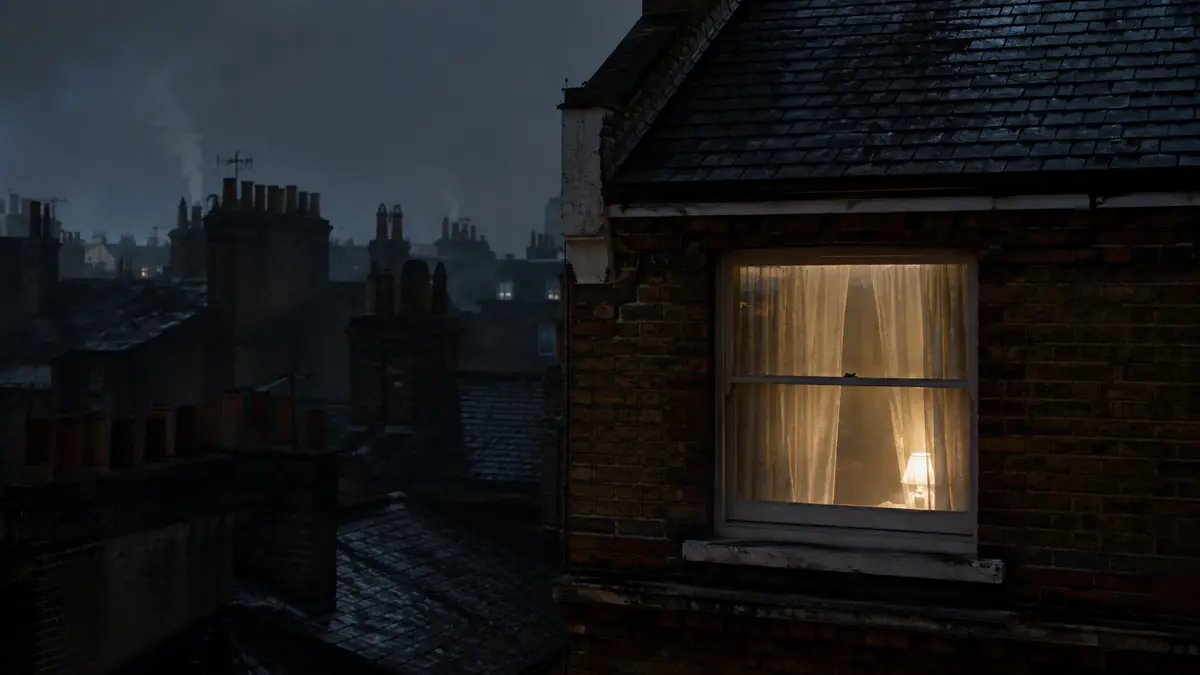
A Yukon sled trail and a lit nursery window in Bloomsbury. Two ways of writing a dog: one that goes back to the wild, and one that has been given a job indoors.
The dog that is not on this list
Ask a room to name a famous literary dog and somebody will say the Baskerville hound, and somebody else will describe a basset. The two have merged, and it is worth untangling because the truth is more interesting than the mix-up.
Doyle's hound is half bloodhound and half mastiff, enormous, gaunt, and painted with phosphorus so that it glows on the moor at night. A basset hound stands about fourteen inches at the shoulder and was bred to move slowly enough for a man on foot to keep up with it. As a spectral beast stalking Dartmoor it would be a very different novel.
The confusion almost certainly starts with Toby, three books earlier. Doyle gives him lop ears, a brown-and-white coat and a clumsy waddling gait, which is a basset in everything but name, and readers have been quietly transplanting him onto the moor ever since.
But there is a real connection, and it runs through the bloodhound half. The modern British basset was built in the 1890s by Everett Millais, who crossed a basset called Nicholas with a bloodhound bitch called Inoculation, by artificial insemination, to put size and bone into the breed, as the breed history records. Doyle's hound and the dog on your sofa are relatives, which is a better fact than the myth.
Why books about dogs work
Books about dogs get away with something no other subject can. A dog cannot narrate its own motives, so the novelist has to show us the animal from the outside and let us do the interpreting - and what we read into a dog is almost always something about the people around it.
That is why the best books about dogs are rarely sentimental. The dog is the fixed point, and the humans are the ones who change.
Frequently Asked Questions
Did Sherlock Holmes have a basset hound?
No. Holmes borrows two dogs across the stories and neither is a basset. Toby, in The Sign of the Four, is described by Doyle as "half spaniel and half lurcher" with "a very clumsy waddling gait", and Pompey in The Adventure of the Missing Three-Quarter is a draghound. The lop ears and the waddle in Doyle's description of Toby are probably why the basset version has stuck.
What breed was the Hound of the Baskervilles?
A cross. Doyle writes that "it was not a pure bloodhound and it was not a pure mastiff; but it appeared to be a combination of the two", and describes it as gaunt, savage and as large as a small lioness - the passage is in the Project Gutenberg text. Stapleton buys it in London from Ross and Mangles, dealers in the Fulham Road, and paints it with phosphorus - the hound is a hoax, not a ghost.
Which is the oldest famous dog in literature?
Argos, in Homer's Odyssey, written down somewhere around the eighth century BC. He appears for a handful of lines: aged, neglected, lying on a dung heap, and the only living thing on Ithaca to recognise Odysseus through his disguise. He wags his tail and dies.
What is the best dog book to read first?
If you want the funniest, Three Men in a Boat. If you want the one that will stay with you, The Call of the Wild, which is short and considerably harder than its reputation. If you have only ten minutes, book seventeen of the Odyssey.
Are these suitable for children?
Lassie Come-Home and The Incredible Journey are written for younger readers and hold up. Peter Pan and Three Men in a Boat are fine read aloud. Cujo is emphatically not, and The Call of the Wild is bleaker than most people remember being told at school.
Which editions do you recommend?
For the Odyssey, Emily Wilson's translation is the most readable modern verse version by a distance. The Doyle, Dickens, Jerome and Barrie titles are all out of copyright and available in good cheap paperbacks - buy the one with a readable typeface rather than the cheapest.
 Shelf 02
Crime & Mystery
Cosy crime, gritty thrillers and a good whodunnit for a wet afternoon.
Browse → Shelf 03
Nature & Countryside
Nature writing, walking, farming and the wild places - our house speciality.
Browse → Shelf 04
History
Popular history, biography and the stories behind the stories.
Browse → Shelf 05
Cookery
Seasonal cooking, baking and the kitchen books worth the shelf space.
Browse →