
Forty-one novels, written over thirty-two years, and the single most common reason people never begin. The good news is that Discworld was never designed as a queue. It is a set of overlapping series sharing one flat world, and each strand has its own front door. Below is the full publication order for reference, the six strands explained, and the handful of books we would actually put in a newcomer's hands.
Editor's Picks
- Guards! Guards! - the best front door there is, and it stays good for eight more books
- Mort - the funniest single volume, and the one that converts sceptics
- Small Gods - a complete story on its own, no series knowledge needed
- Going Postal - the late-period masterpiece, and a perfect standalone
Publication order works, but nobody needs it
Every Discworld novel was written to be readable on its own. Recurring characters are reintroduced, running jokes are re-explained, and the world is rebuilt from scratch in the first thirty pages of each book. Pratchett did that deliberately, because he knew perfectly well that readers were going to wander in through whichever door happened to be open.
So publication order is not wrong. It is simply the least appealing option, because the first two books are the weakest. The Colour of Magic and The Light Fantastic are affectionate parodies of the fantasy paperbacks of the early eighties, written before Pratchett had found the thing he was actually good at. Readers who begin there frequently stop there, which is a shame, because what they stopped before was Mort.
The version of Discworld that people love, the one about institutions, decency, power and the machinery of a working city, starts around book four and does not really hit its stride until book eight. Start where the good writing is, then go back for the early ones later if you want the completist's satisfaction.
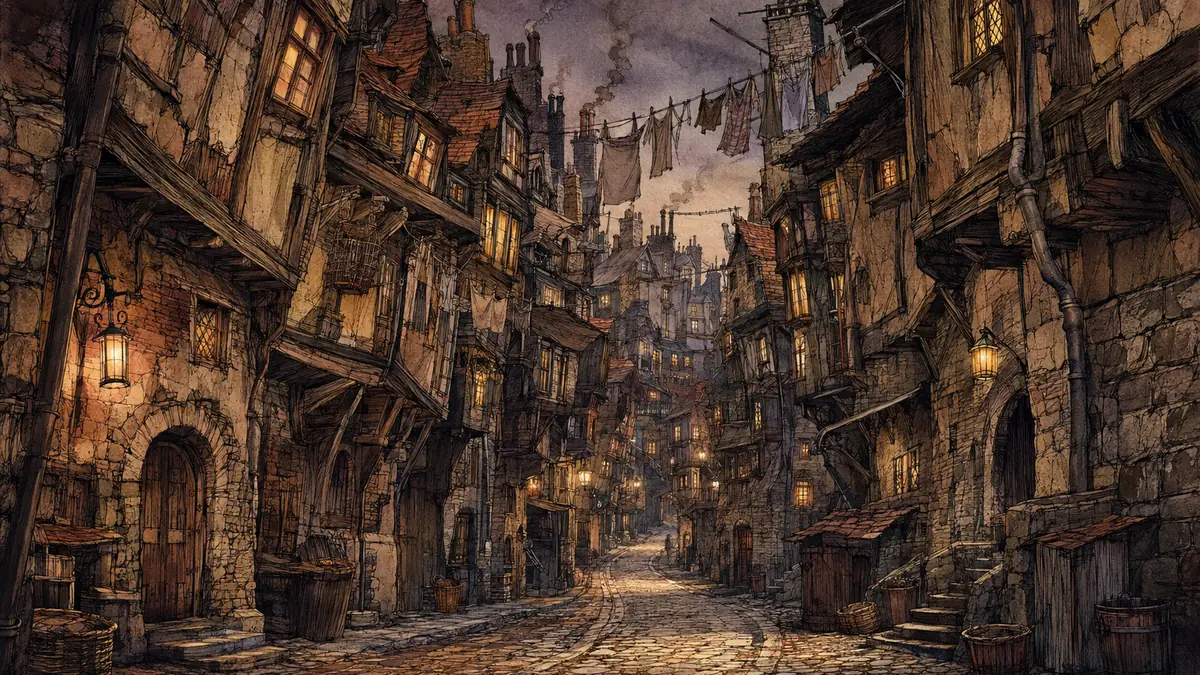
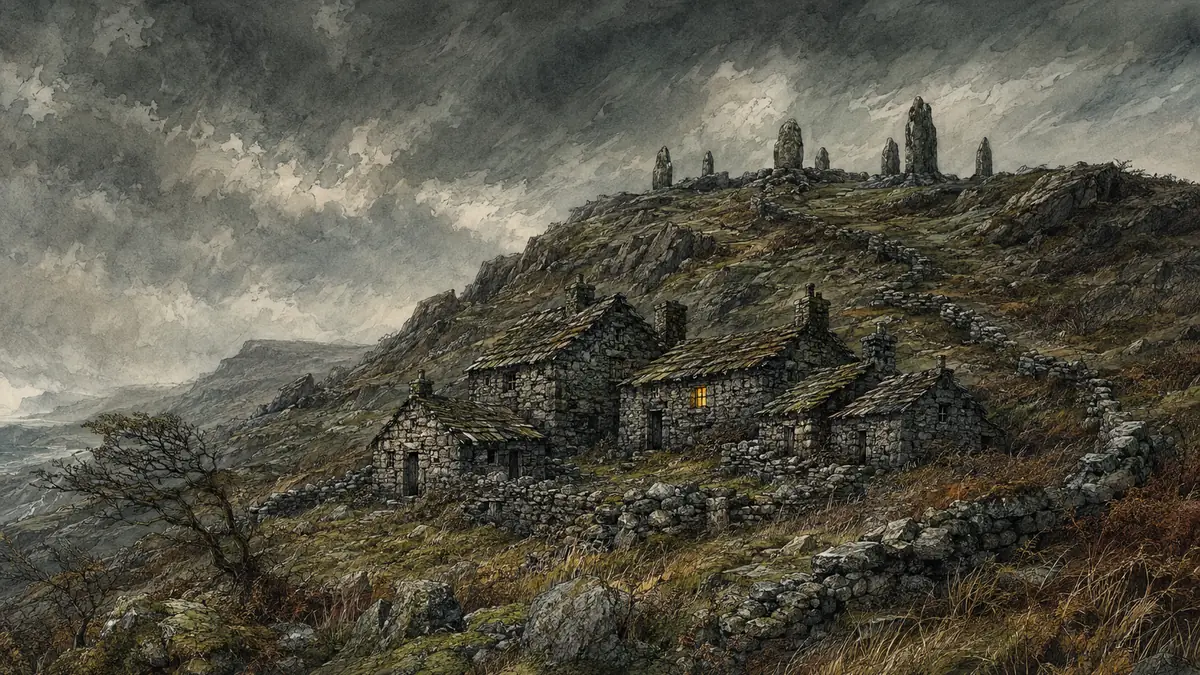
Two of the six strands: the city, and the hills. Most readers pick one and stay a while.
The six strands, and what each one is about
The practical way to read Discworld is to choose a strand and follow it. Each has its own cast, its own preoccupations and its own arc, and each strand reads in internal order without any reference to the others. Crossovers exist and are a pleasure when they land, but nothing is spoiled by taking the strands out of sequence.
The Watch - a city, a police force, an argument about power
Six novels following a broken-down night watchman who becomes the most quietly principled man in the city. Political, angry, extremely funny, and the best sustained run in the series. Start with Guards! Guards! and read straight through to Night Watch, which is the finest thing Pratchett wrote.
Death - the anthropomorphic personification, and his working conditions
Five novels about the skeleton with the scythe, who is fascinated by humans and terrible at being one. Warmer and stranger than the others, with the series' best endings. Start with Mort, the story of what happens when Death takes an apprentice and goes looking for a hobby.
The Witches - three women and the whole business of who gets to decide
Six novels on the borderline between the kingdoms, where magic is mostly a matter of knowing things and letting people believe what they need to. Sharp about class, storytelling and rural life. Start with Wyrd Sisters rather than Equal Rites, which came first but is not yet the same series.
Tiffany Aching - the witches again, for younger readers, and better
Five novels about a chalk-country girl learning the job. Marketed for children, read mostly by adults, and containing some of Pratchett's most serious writing about grief and duty. Start with The Wee Free Men, and be aware that the last one, The Shepherd's Crown, will wreck you.
Industrial Revolution - the city drags itself into the modern age
Four novels in which a con man is handed the post office, then the mint, then the railway. Late-period Pratchett with a plot engine, and the most accessible of all the strands. Start with Going Postal, which needs nothing else read first.
Rincewind and the Wizards - the running-away books
Eight novels of chase and slapstick following a cowardly wizard with no magic. This is where the series begins and it is the strand we recommend last, not because it is bad but because everything else is better. Start with The Colour of Magic only if you want the history.
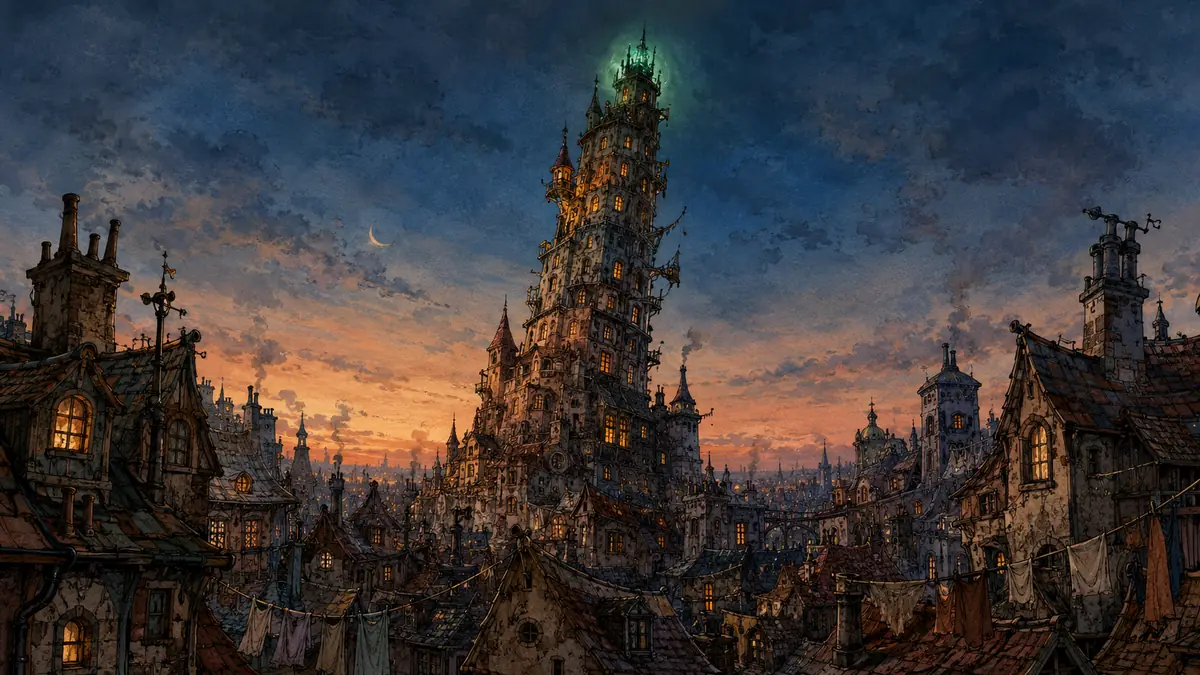
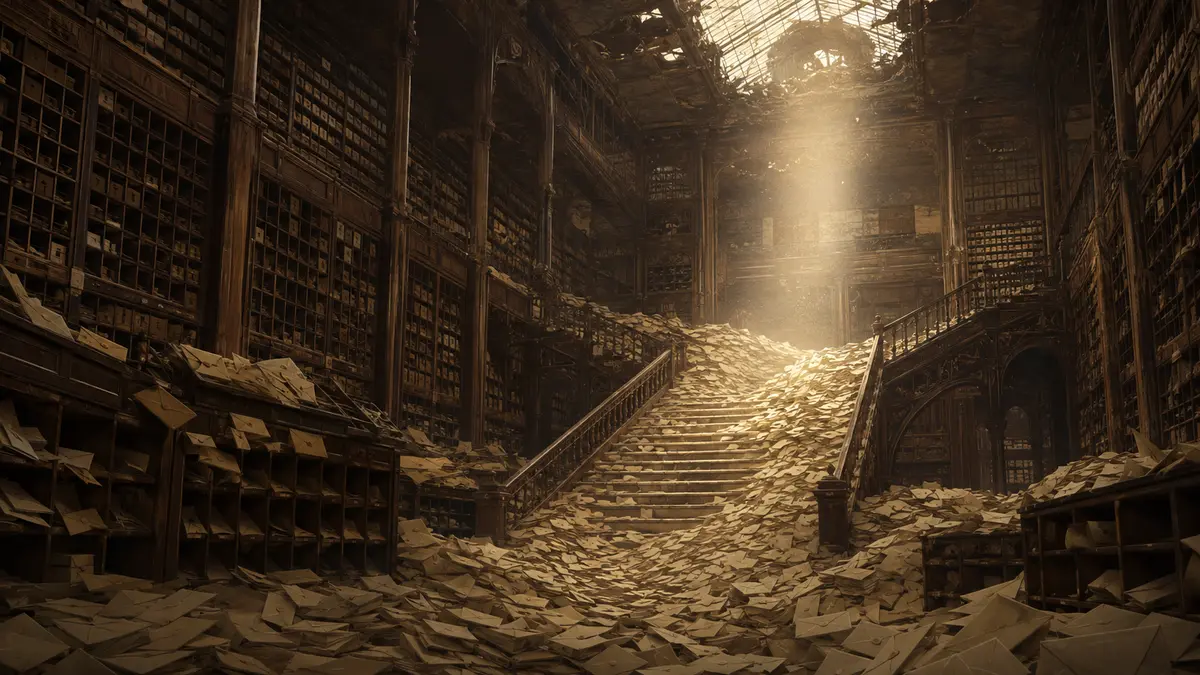
The oldest strand and the newest: unregulated magic, and a post office being dragged into working order.
Where to start with Discworld: twelve books, if you only ever read twelve
These are the ones we hand over. Each works as a standalone, each is near the top of its strand, and between them they cover everything the series does well. Read in any order that appeals.
 01
01Guards! Guards!
A secret society summons a dragon to install a puppet king, and the only people standing in the way are the three remaining members of the Night Watch plus a hopelessly earnest new recruit. This is where the series stops being a parody and becomes a body of work, and it is still the single best entry point.
 02
02Mort
Death takes on an apprentice, discovers curry and fishing, and leaves a teenage boy in charge of collecting souls. The gag rate is the highest in the series and the last thirty pages are genuinely moving. The book that converts people.
 03
03Small Gods
A great god has been reduced to a tortoise because only one person in his vast church still actually believes. Furious about organised religion, tender about faith, and entirely self-contained. If you read one Discworld novel and stop, read this one.
 04
04Going Postal
A convicted fraudster is offered a choice between hanging and running the derelict post office. Late Pratchett with an actual thriller plot underneath, and the most immediately readable book in the series.
 05
05Night Watch
Commander Vimes is thrown back in time into the revolution he lived through as a boy, and has to play the part of the mentor who taught him everything. Bleak, controlled and superb. Read the earlier Watch books first; this one earns its weight from them.
 06
06Wyrd Sisters
Three witches decline to meddle in the affairs of kings, then meddle extensively. A <em>Macbeth</em> demolition job that is also a serious argument about the power of a good story over the truth.
 07
07The Wee Free Men
A nine-year-old dairy farmer's daughter goes into the fairy world after her stolen brother, armed with a frying pan and an unshakeable sense of what is right. The best-constructed novel Pratchett wrote and the finest thing to give a clever twelve-year-old.
 08
08Men at Arms
The Watch is forced to diversify and acquires a dwarf, a troll and a werewolf, just as somebody starts murdering people with the Disc's first gun. Sharper and angrier than <em>Guards! Guards!</em>, and the book where the strand's real subject arrives.
 09
09Thief of Time
A perfect clock is being built, which will stop time entirely, and the only people who can prevent it are a monk, a milkman and Death's granddaughter. The most inventive plot in the series.
 10
10The Truth
A young man accidentally invents the newspaper and immediately discovers libel, sources, deadlines and the fact that people would rather be entertained than informed. Reads better every year.
 11
11Monstrous Regiment
A girl cuts her hair and joins the army to find her brother, and finds the regiment is not quite what it appears. Self-contained, furious about war, and structurally the boldest thing he did.
 12
12The Shepherd's Crown
The last Discworld novel, published after his death and visibly unfinished in places. It is still the right ending, and the opening chapters are as good as anything in the series. Do not read it first.
The full Discworld reading order: all 41 Discworld books in order
All forty-one novels in publication order, with the strand each belongs to. The three young-reader Discworld books are included because they are part of the same world and two of them are excellent. Not listed here: the short stories, the Science of Discworld volumes, the maps and the companion books, none of which you need.
- 01The Colour of Magic1983Rincewind
- 02The Light Fantastic1986Rincewind
- 03Equal Rites1987Witches
- 04Mort1988Death
- 05Sourcery1988Rincewind
- 06Wyrd Sisters1988Witches
- 07Pyramids1989Standalone
- 08Guards! Guards!1990The Watch
- 09Eric1990Rincewind
- 10Moving Pictures1990Industrial Revolution
- 11Reaper Man1991Death
- 12Witches Abroad1992Witches
- 13Small Gods1992Standalone
- 14Lords and Ladies1992Witches
- 15Men at Arms1993The Watch
- 16Soul Music1994Death
- 17Interesting Times1994Rincewind
- 18Maskerade1995Witches
- 19Feet of Clay1996The Watch
- 20Hogfather1996Death
- 21Jingo1997The Watch
- 22The Last Continent1998Rincewind
- 23Carpe Jugulum1998Witches
- 24The Fifth Elephant1999The Watch
- 25The Truth2000Industrial Revolution
- 26Thief of Time2001Death
- 27The Last Hero2001Rincewind
- 28The Amazing Maurice and His Educated Rodents2001Younger readers
- 29Night Watch2002The Watch
- 30The Wee Free Men2003Tiffany Aching
- 31Monstrous Regiment2003Standalone
- 32A Hat Full of Sky2004Tiffany Aching
- 33Going Postal2004Industrial Revolution
- 34Thud!2005The Watch
- 35Wintersmith2006Tiffany Aching
- 36Making Money2007Industrial Revolution
- 37Unseen Academicals2009Wizards
- 38I Shall Wear Midnight2010Tiffany Aching
- 39Snuff2011The Watch
- 40Raising Steam2013Industrial Revolution
- 41The Shepherd's Crown2015Tiffany Aching
Two of the series' best sustained jokes, and both of them eventually turn out to be about mortality.
When you finish the forty-one
There is no more Discworld and there will not be any. Pratchett's instruction that his unfinished drafts be destroyed was carried out in 2017, by steamroller, and the series ends exactly where The Shepherd's Crown leaves it.
What survives is the non-Discworld work, and some of it is essential. Good Omens, written with Neil Gaiman, is the obvious next step. Nation is the best thing he wrote outside the Disc and possibly the best thing he wrote at all.
If it was the shape of the humour you loved, the closest living writers are Jasper Fforde and the late Douglas Adams. If it was the moral seriousness under the jokes, try Becky Chambers or Ursula K. Le Guin.
And if you want to know what to press on a friend who insists they don't like fantasy: Small Gods. It has no wizards, no returning cast and no dependencies, and it is a novel about belief and cruelty that happens to be set on a flat world carried by a turtle.
Other reading orders and starting points
Long series are easier with a map. These are the running orders and starting points we keep for the authors readers ask about most.
Frequently Asked Questions
Do I have to read Discworld in order?
No. Each novel was written to stand alone, and the world is reintroduced in every book. The only order that genuinely matters is the internal order of each strand, and even then the strands can be read in any sequence you like.
Which Discworld book should I read first?
Guards! Guards! for most people. If you want something completely self-contained, Small Gods. If you want the funniest one, Mort. We would not start anyone on The Colour of Magic.
How many Discworld books are there?
Forty-one novels, published between 1983 and 2015. That count includes the three written for younger readers. It excludes the short stories, companion volumes, maps and the four Science of Discworld books.
Are the Tiffany Aching books children's books?
They were published as such, and they read perfectly well at eleven or twelve. They are also, in adult company, some of the most serious writing Pratchett did about death, responsibility and what it costs to be the person who copes.
What order are the Watch books in?
Guards! Guards!, Men at Arms, Feet of Clay, Jingo, The Fifth Elephant, Night Watch, Thud!, then Snuff. This one is worth reading in order, because the cast genuinely develops across it.
Is there a Discworld book that is a good gift?
Going Postal is the safest present for someone who has never read any. It is late, polished, funny, plot-driven and needs no prior knowledge at all.
 Shelf 01
Fiction
Literary novels, contemporary storytelling and the books everyone's talking about.
Browse → Shelf 02
Crime & Mystery
Cosy crime, gritty thrillers and a good whodunnit for a wet afternoon.
Browse → Shelf 03
Nature & Countryside
Nature writing, walking, farming and the wild places - our house speciality.
Browse → Shelf 04
History
Popular history, biography and the stories behind the stories.
Browse →