
Here's the open secret about Discworld: the worst place to start is book one. Pratchett wrote forty-one Discworld novels and got better for thirty years - so the door you choose matters. These are the entry points we recommend across the counter, and the order that actually works.
Editor's Picks
- Small Gods - the standalone masterpiece
- Wyrd Sisters - the witches at full cackle
- Night Watch - the series' towering peak
Don't start with book one
Almost everyone who bounces off Discworld bounced off The Colour of Magic, and it is the most common piece of bad advice in fantasy. It was written in 1983 as a broad parody of the sword-and-sorcery paperbacks of the time, before Pratchett had worked out what the Disc was actually for. The jokes land, but the thing that makes the later books extraordinary - the anger under the comedy, the moral seriousness, the sense that someone is genuinely furious about how people treat each other - is barely there yet.
He got better for thirty years, and unusually for a long series, he never stopped. So the honest advice is to start where he was already good and read outwards. Nothing is spoiled by doing this. The Disc has no ongoing plot to fall behind on.
The five doors into Discworld
The reason there is no single answer to this question is that Discworld isn't one series. It is roughly five, running in parallel across the same world, and they read completely differently. Pick the one that sounds like you and start there.
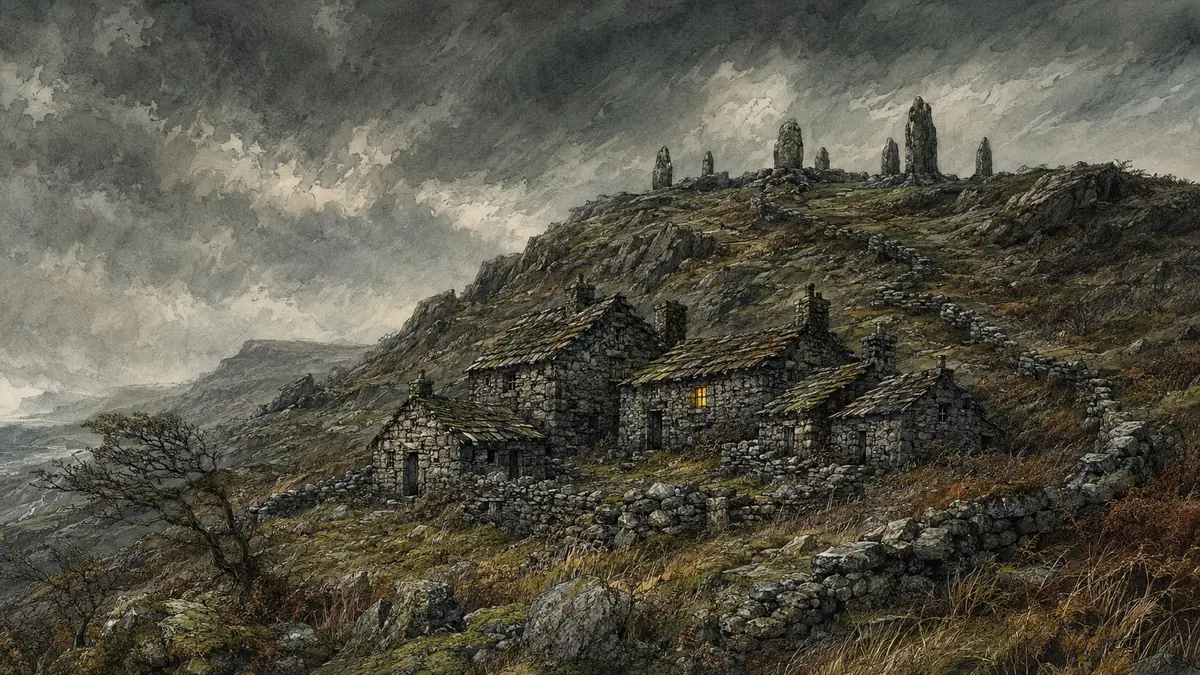

The Ramtops: small mountain villages, a great deal of weather, and standing stones on the moor above. Home ground for the witches, and nothing like as gentle as it looks.
The Watch - city, policing, institutions
Sam Vimes and the Ankh-Morpork City Watch. Starts as a joke about incompetent night-watchmen and turns into the most serious thread in the whole series: a running argument about power, class, policing and what a decent person does inside a rotten system. Start with Guards! Guards!, or, if you want to see the ceiling of what Pratchett could do, jump to Night Watch and go back.
The Witches - folklore, storytelling, rural malice
Granny Weatherwax and Nanny Ogg, in the mountain kingdom of Lancre. These are books about the stories people tell themselves and what happens when someone refuses to play the part written for her. Sharper and colder than they first look. Start with Wyrd Sisters.
Death - mortality, wonder, the best jokes
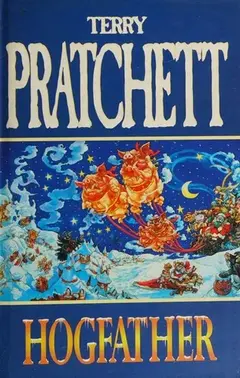
Death is a recurring character everywhere on the Disc, but he anchors his own short sequence, and it contains some of Pratchett's warmest writing. Start with Mort, or with Hogfather if it's anywhere near Christmas.
The Wizards - academia, chaos, farce
Unseen University and the fraying Rincewind. The broadest comedy and the loosest plotting, and the sub-series most people come to last. Enjoyable, but a poor first impression of what the Disc can do.
Moist von Lipwig - the industrial revolution arc
The late books, in which Ankh-Morpork acquires a postal service, a bank and a railway, narrated by a reformed con man. Fast, funny, and structurally the most conventional novels in the series. Start with Going Postal - it is also the single best entry point for anyone who does not normally read fantasy.
Tiffany Aching - written for younger readers, and among his best
There is a sixth door: the Tiffany Aching books, written for younger readers and among the finest things he wrote. The Wee Free Men works perfectly well for adults, and I Shall Wear Midnight is devastating.
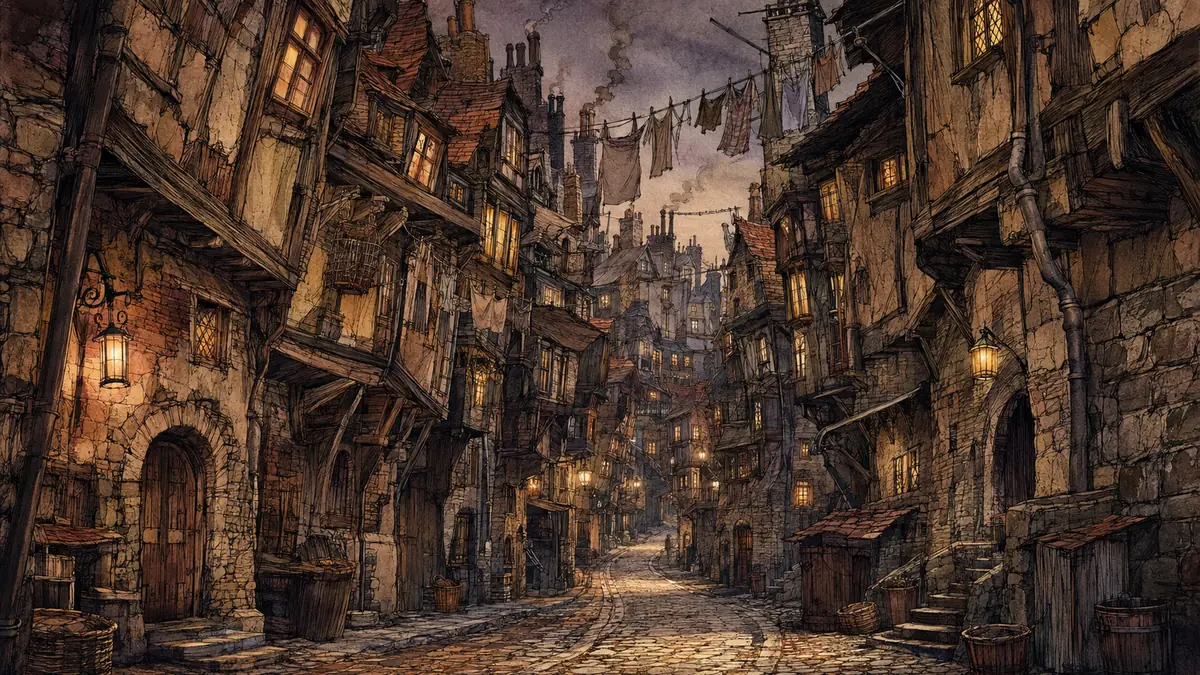
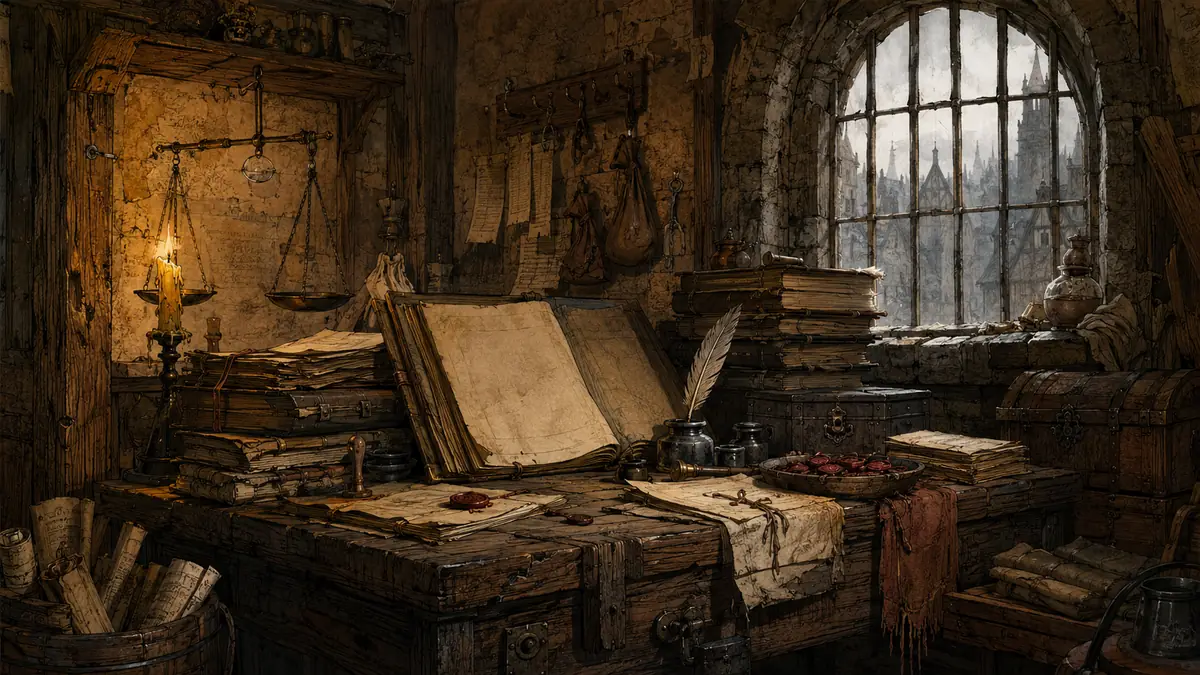
Ankh-Morpork, crowded and teetering on the street and run from behind closed doors by guilds and ledgers. Half the Watch books are really about institutions.
 01
01Guards! Guards!
A dragon terrorises the city and the drunken, hopeless Night Watch must respond. The best single entry point to Discworld - and the start of its greatest strand. If you only ever read one Discworld book, make it this one.
 02
02Mort
Death takes an apprentice; the apprentice makes a mess of reality. The first early book where everything clicks - and Death is the series' best character. A gentle entry point, and short enough to test whether the series is for you.
 03
03Going Postal
A conman is given a choice: die, or run the post office. Late, polished Pratchett - many readers' favourite, and nearly standalone. Works as a standalone, so it is a fair place to start if the Watch books do not appeal.
 04
04Small Gods
A great god manifests as a one-eyed tortoise with a single believer left. Completely standalone and quietly profound - the one for sceptics of comic fantasy. No prior Discworld needed, and the one most often pressed on people who dislike fantasy.
 05
05Wyrd Sisters
Three witches, a murdered king and a kingdom that needs meddling with. Macbeth turned inside out - Granny Weatherwax at full cackle. The best starting point for the witches, who are the series' other great strand.
 06
06Night Watch
Vimes is thrown back in time to police his own city's revolution. The consensus peak of the whole series - but arrive via Guards! Guards! first. Save it; read chronologically and it becomes the payoff rather than the entry point.
 07
07The Wee Free Men
A nine-year-old witch with a frying pan versus the fairy queen - aided by six-inch blue hooligans. The door in for younger readers (and plenty of adults). First of five Tiffany Aching books.
 08
08Good Omens
An angel and a demon team up to prevent the apocalypse, having grown fond of the place. Not Discworld - and the perfect no-commitment taster. Co-written with Neil Gaiman, and the easiest sell to anyone put off by a forty-book series.
 09
09The Colour of Magic
Where it all began - and where you shouldn't. A looser, jokier parody that doesn't show what the series becomes. Read it fifth, with affection. Not representative of what follows.
 10
10Reaper Man
Death is made redundant and takes a job bringing in the harvest. Funny and unexpectedly profound about time and endings. Read it after Mort, when Death is already a familiar presence rather than a novelty.
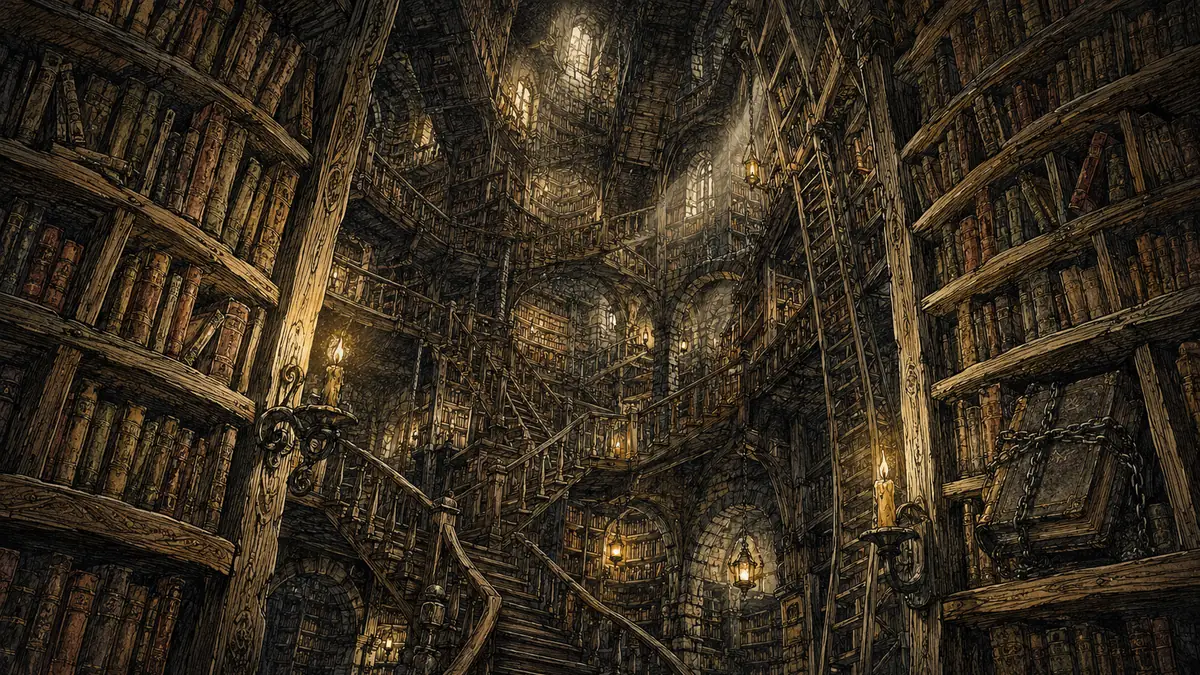
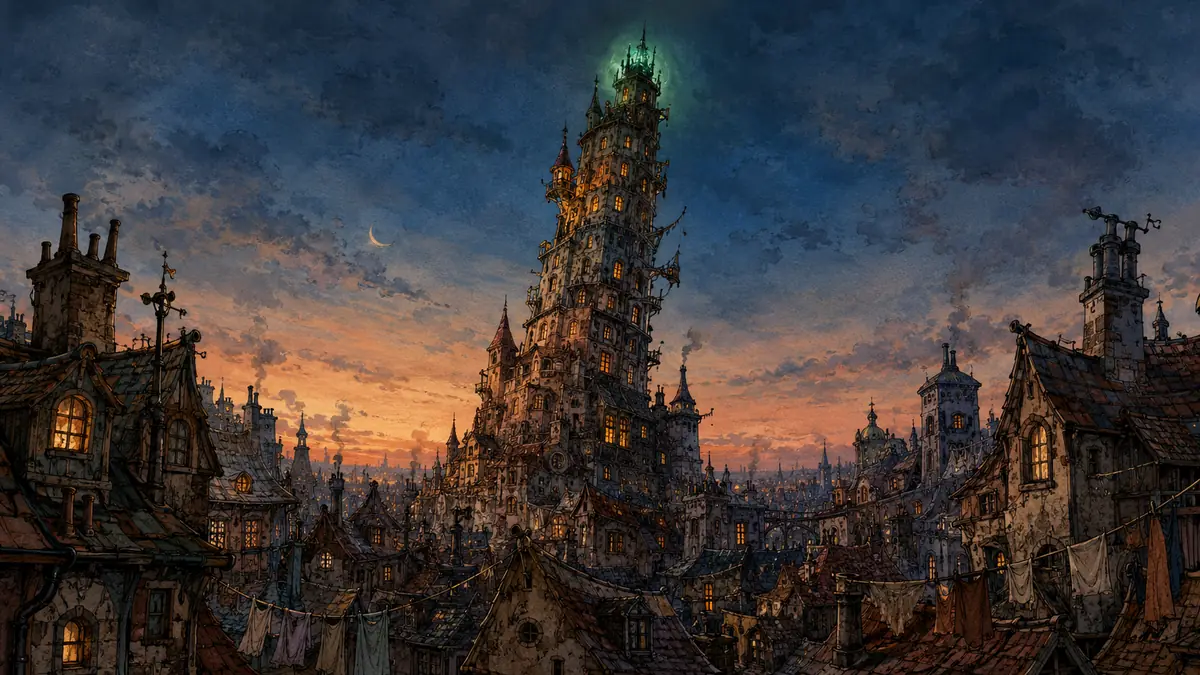
The Unseen University Library, where the shelves do not obey geometry, and the tower above it. The wizards' thread is the broadest comedy on the Disc.
Three ways to read on from here
Once a first book has landed, there are three approaches and no wrong one.
Follow the sub-series. Finish the Watch books, then pick another door. This is what most readers do and it gives each thread its full arc. The characters develop properly and the payoffs land hardest.
Publication order from your starting point. Read forward chronologically from whichever book you began with. You watch the world thicken in real time - recurring characters drift between threads, the city changes, the technology creeps in. Slower, and much the most rewarding on a second pass.
Cherry-pick the standalones. Small Gods and Monstrous Regiment need no context at all, and several of the best books sit outside the sub-series entirely. A perfectly good way to read Discworld is to never commit to a thread. The Truth, Moving Pictures and Pyramids stand alone in the same way, and each takes a different corner of the world apart.
What we would avoid is the completionist instinct - starting at book one and grinding through all forty-one in order. That front-loads the weakest material and it is where most abandoned Discworld attempts die. Almost nobody who starts at Guards! Guards! puts the series down.
Other reading orders and starting points
Long series are easier with a map. These are the running orders and starting points we keep for the authors readers ask about most.
Frequently Asked Questions
Why shouldn't I just start at book one?
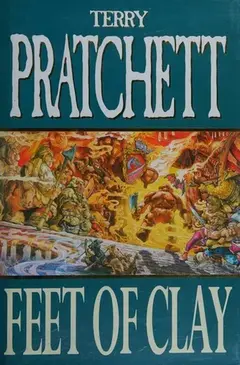
The Colour of Magic (1983) is a broad genre parody; Pratchett found his real voice - character, satire, heart - a few books in. Start at Guards! Guards! or Mort and book one becomes a fun flashback later.
What's the reading order?
Discworld runs in strands - City Watch, Death, Witches, Industrial Revolution, Tiffany Aching - each readable in sequence independently. Pick a strand from its first book; our list marks the doors in.
Which one for a teenager?
The Wee Free Men - the Tiffany Aching books were written for younger readers and are among his very best, full stop.
How many Discworld books are there?
Forty-one novels published between 1983 and 2015, plus shorter works and companion books. They are not one sequence: the novels divide into several parallel strands set in the same world, so the count is far less daunting than it sounds and you never need to read all of them.
Do I have to read Discworld in order?
No. There is no ongoing plot to fall behind on and almost every book stands alone. What order does affect is quality - Pratchett improved steadily for thirty years, so starting at the beginning means starting with the weakest material. Pick a strand and read forward from its first good book.
Which is the best Discworld book?
Night Watch is the usual answer and the hardest to argue with, but it lands far better once you already know Sam Vimes. Small Gods is the best of the standalones and needs no context at all. Both are a long way from where the series started.
Is Discworld any good if you do not read fantasy?
Yes, and a great many of its readers do not. The setting is a vehicle for satire about institutions, belief, policing and power rather than an end in itself. Going Postal in particular reads like a comic novel that happens to be set somewhere else.
Where do the Tiffany Aching books fit?
They were published for younger readers and run as their own five-book sequence inside the Discworld, beginning with The Wee Free Men. They work perfectly well for adults, they connect to the Witches strand, and I Shall Wear Midnight is among the best things Pratchett wrote.
 Shelf 02
Crime & Mystery
Cosy crime, gritty thrillers and a good whodunnit for a wet afternoon.
Browse → Shelf 03
Nature & Countryside
Nature writing, walking, farming and the wild places - our house speciality.
Browse → Shelf 04
History
Popular history, biography and the stories behind the stories.
Browse → Shelf 05
Cookery
Seasonal cooking, baking and the kitchen books worth the shelf space.
Browse →