
Thirteen novels, published between 2004 and 2020, following a Northumbrian nobleman raised by Danes through the wars that turned a handful of Saxon kingdoms into England. Unlike most long series this one has a single continuous plot, a proper ending, and no reason at all to read it out of order. Below is the full list, the four arcs it divides into, how it lines up against the television adaptation, and what to read next.
Editor's Picks
- The Last Kingdom - the only place to start, and it does not mess about
- The Lords of the North - the best of the early run and the one that hooks people
- The Pagan Lord - mid-series peak, with Uhtred older and considerably worse behaved
- War Lord - a genuine ending, which long series rarely manage
One order, and it is the obvious one
This is the easy one. The Last Kingdom, called the Saxon Stories in its early UK editions and the Warrior Chronicles elsewhere, runs in a single unbroken chronological line from around 866 to 937. Publication order and chronological order are identical. There are no prequels, no side novels, no short stories you need, and the series is finished.
Read it in order, starting with The Last Kingdom. There is no clever alternative and anyone offering you one is overcomplicating it.
The one thing worth knowing before you begin: the middle of the series is repetitive by design. Uhtred wins a battle, loses his lands, swears another oath he resents, and marches north again. If you find that a problem it will be a problem for about six books. If you find it a comfort, which most readers do, it is the best thing about them.
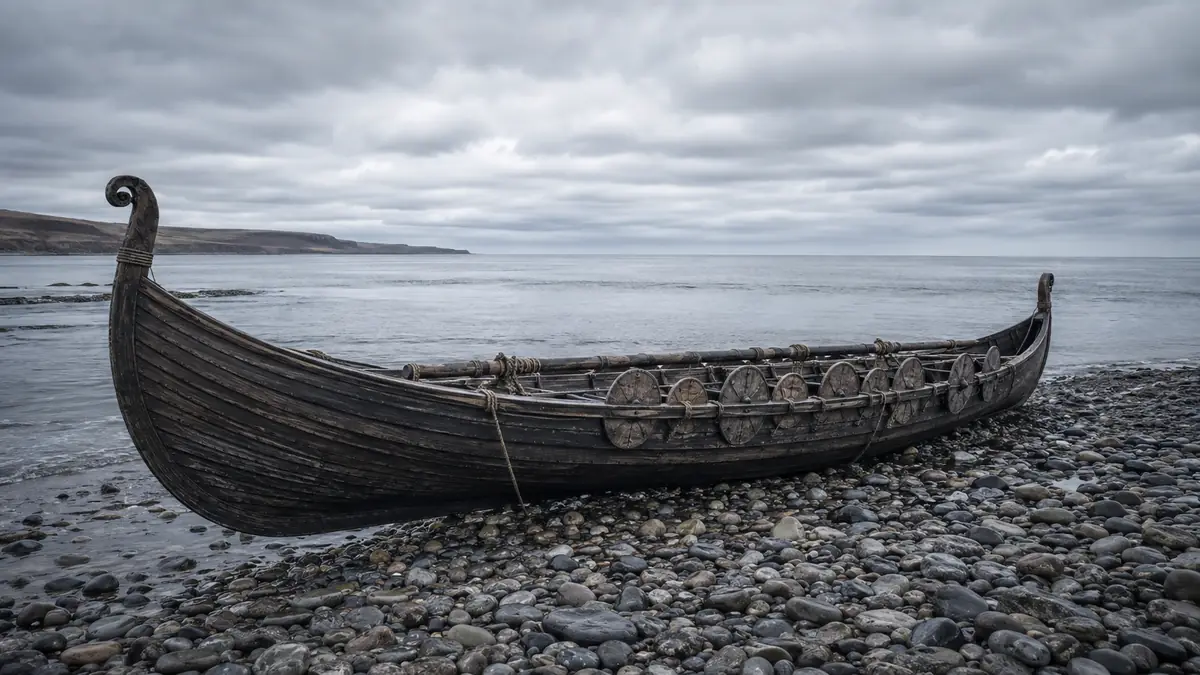
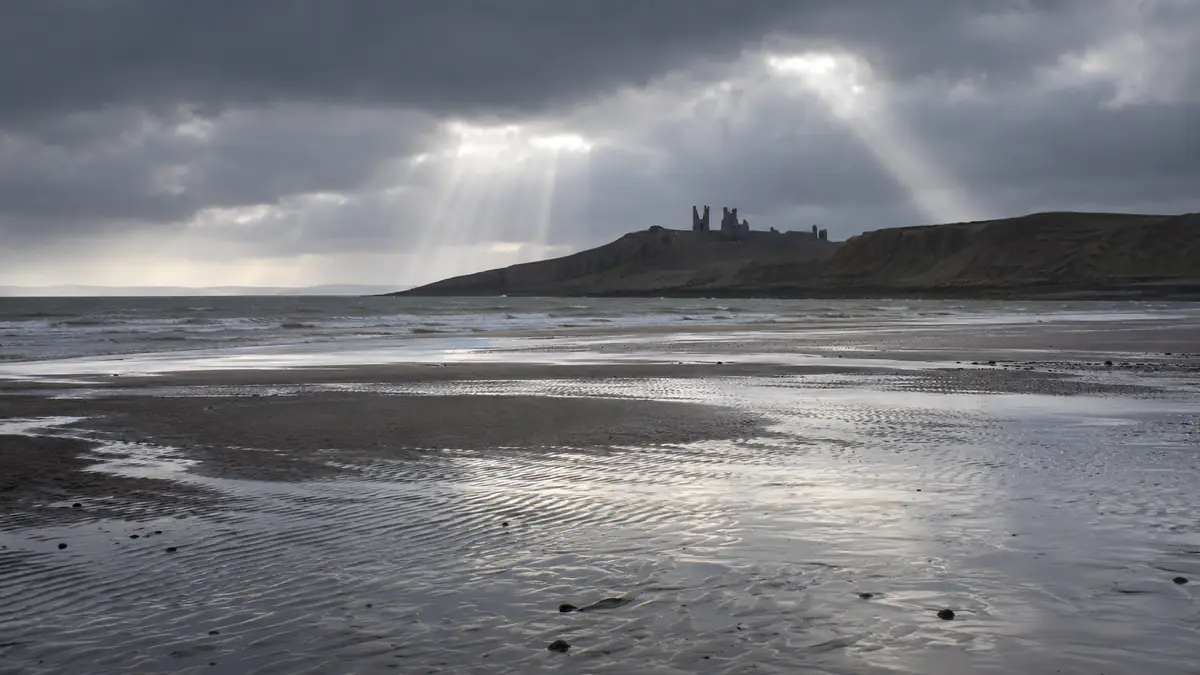
Two halves of one man: the Danish ships that raised him and the Northumbrian coast he wants back.
The four arcs
The thirteen novels group into four blocks, each covering a phase of the making of England and a phase of Uhtred's life. You should still read them in order, but this is what you are getting.
Alfred's war, books one to three - survival
Wessex is the last Saxon kingdom standing and very nearly does not. The strongest opening stretch Cornwell has written, ending with The Lords of the North, which is where most readers become committed. Start with The Last Kingdom, and there is no alternative.
The long middle, books four to six - oaths and consequences
Uhtred fights for a king he does not like, in a cause he does not share, for reasons that keep changing. Includes Death of Kings and the end of Alfred, which is the emotional centre of the whole series.
The next generation, books seven to ten - Aethelflaed's Mercia
Alfred's daughter takes the war north while Uhtred, now in his fifties, finds himself the old man in the shield wall. The Pagan Lord is the peak. The best-written stretch of the thirteen.
Bebbanburg and after, books eleven to thirteen - the ending
Everything the series has promised since page one finally arrives, and then Cornwell keeps going for one more book to show what it costs. War Lord closes at Brunanburh in 937 and closes it properly.
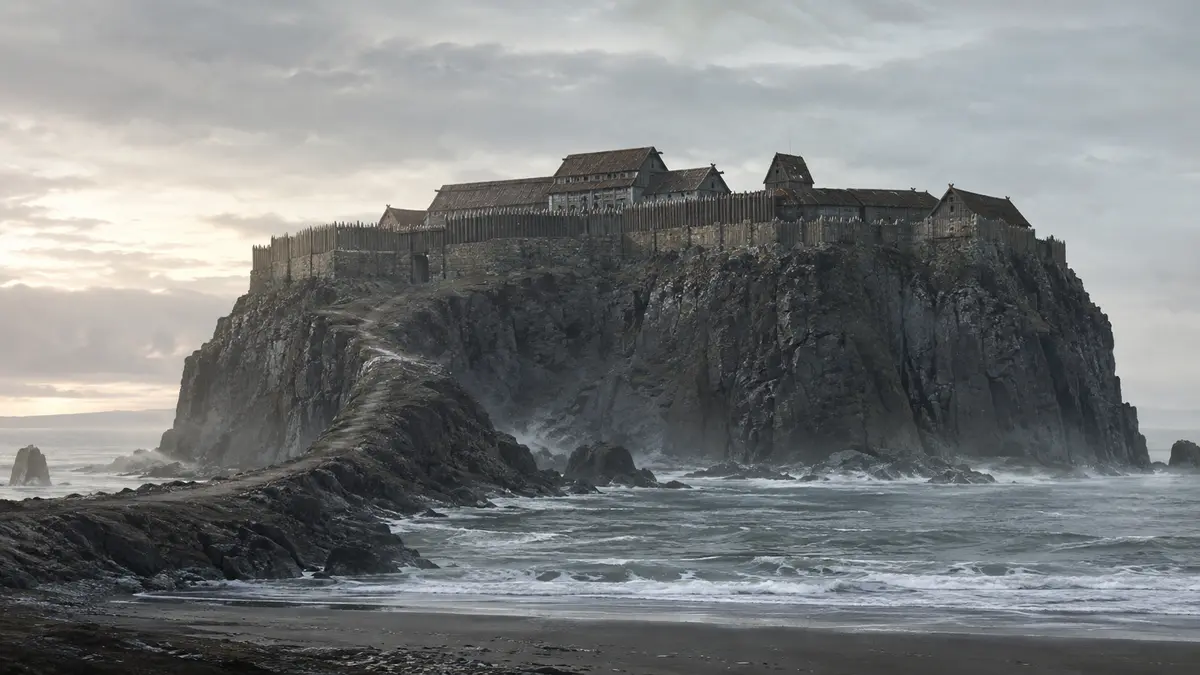
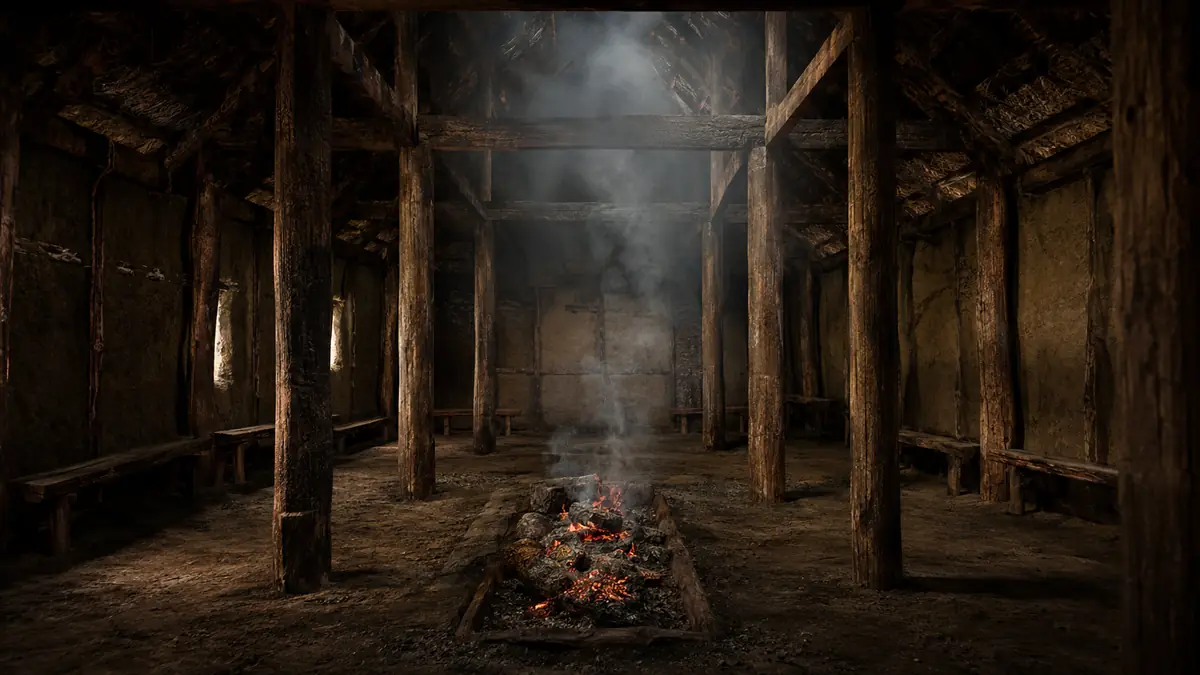
The fortress he spends thirteen books trying to take, and the hall he keeps having to swear oaths in.
Six books, if you want to know what you are committing to
Not a substitute for reading in order, because this series genuinely needs it. These are simply the high points, and the ones to look forward to.
 01
01The Last Kingdom
A Northumbrian boy is captured at ten by the Danes who killed his father, raised as one of them, and grows up belonging to neither side. Sets up thirteen books of divided loyalty in about forty pages and never slows down.
 02
02The Pale Horseman
Wessex has collapsed and Alfred is hiding in the marshes at Athelney with a few dozen men. The lowest point of the war and the making of the series, ending at Ethandun.
 03
03The Lords of the North
Uhtred goes home to Northumbria to take back Bebbanburg, and things go very badly indeed. The best of the early novels and the point at which most readers commit to all thirteen.
 04
04Death of Kings
Alfred is dying, his son is untested, and every Dane in Britain knows it. The emotional centre of the series and Cornwell's best writing about a king he clearly admired and never quite liked.
 05
05The Pagan Lord
Uhtred, in his fifties, burns down a monastery, loses everything and rides north with a handful of men. The series at its sharpest, and the funniest of the thirteen.
 06
06War Lord
Brunanburh, and the last of it. Cornwell brings a seventeen-year, thirteen-book series to a close without cheating, which almost nobody manages.
The full Last Kingdom reading order
All thirteen novels in order. The series is complete and the events run continuously from the Danish invasions of the 860s to the battle of Brunanburh in 937. Note that the first three books were originally published in the UK as the Saxon Stories and are sold elsewhere as the Warrior Chronicles: the titles and the order are the same in all editions.
- 01The Last Kingdom2004
- 02The Pale Horseman2005
- 03The Lords of the North2006
- 04Sword Song2007
- 05The Burning Land2009
- 06Death of Kings2011
- 07The Pagan Lord2013
- 08The Empty Throne2014
- 09Warriors of the Storm2015
- 10The Flame Bearer2016
- 11War of the Wolf2018
- 12Sword of Kings2019
- 13War Lord2020The ending
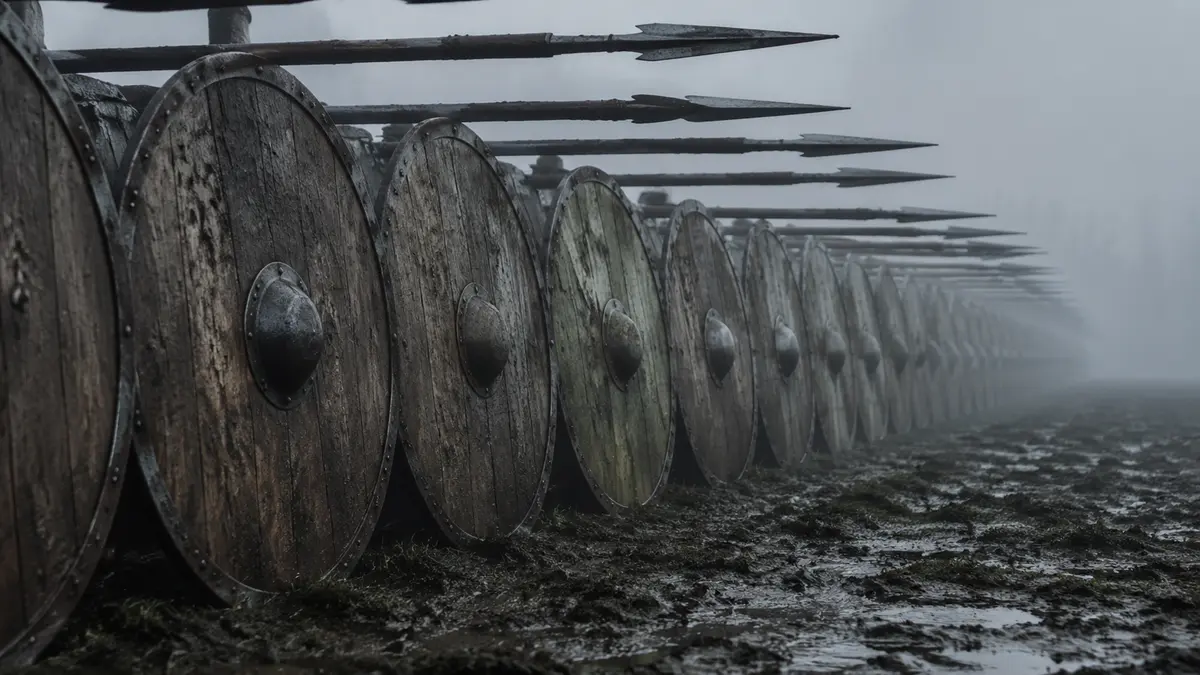
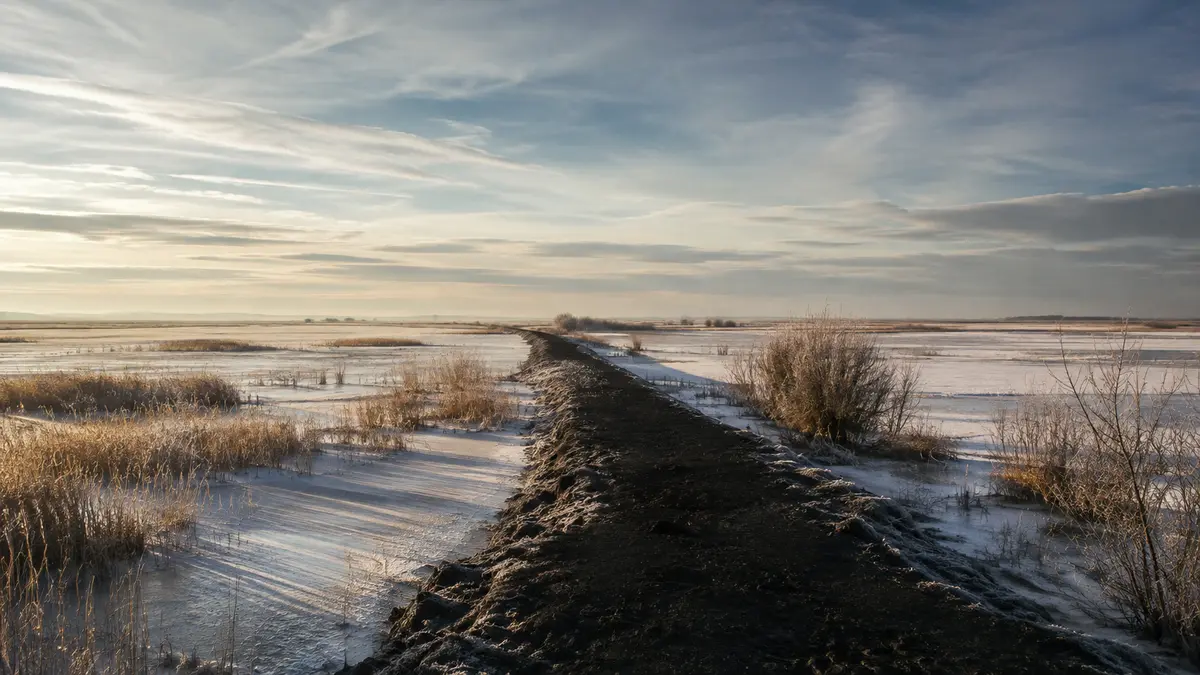
Cornwell writes the shield wall better than anyone. He is nearly as good on the walking between them.
The books against the television series
The adaptation covers the first ten novels across five seasons, then compresses books eleven to thirteen into the film Seven Kings Must Die. It is a good adaptation and a faithful one for the first two seasons, after which it starts inventing.
The largest departures: several characters who die in the books survive on screen and vice versa, the timeline is tightened considerably in the later seasons, and the ending is a different ending. If you have watched it all, the books will still surprise you from roughly book six onward.
If you have read the thirteen and want more Cornwell, the obvious next stop is Sharpe, twenty-four novels in the Napoleonic Wars, and we have a full reading order for those too. The Warlord Chronicles, his three Arthurian novels, are the ones most Cornwell readers rate highest of all.
For the same period from other hands, try Nicola Griffith's Hild for something slower and stranger, or Marion Turner and Max Adams for the actual history of the Northumbrian kingdoms underneath all this.
Other reading orders and starting points
Long series are easier with a map. These are the running orders and starting points we keep for the authors readers ask about most.
Frequently Asked Questions
What order should I read The Last Kingdom books in?
Publication order, which is the same as chronological order. Start with The Last Kingdom and read straight through to War Lord. There are no prequels or side stories to fit in.
How many Last Kingdom books are there?
Thirteen, published between 2004 and 2020. The series is complete and has a proper ending.
Is The Last Kingdom the same as the Saxon Stories?
Yes. The series was published as the Saxon Stories in the UK, the Warrior Chronicles in some other markets, and is now generally sold as The Last Kingdom after the television adaptation. Same books, same order.
Does the TV series follow the books?
Closely for the first two seasons, then increasingly loosely. Five seasons cover the first ten novels and the film Seven Kings Must Die compresses the last three. Several major character fates differ.
Do I need to know Anglo-Saxon history first?
No. Each novel opens with a place-name list giving the modern equivalents and closes with a historical note explaining what actually happened. The books teach you the period as they go.
Which is the best Last Kingdom book?
The Lords of the North and The Pagan Lord are the two most often named, at either end of the middle. War Lord is the most satisfying if you have read the twelve before it.
 Shelf 01
Fiction
Literary novels, contemporary storytelling and the books everyone's talking about.
Browse → Shelf 02
Crime & Mystery
Cosy crime, gritty thrillers and a good whodunnit for a wet afternoon.
Browse → Shelf 03
Nature & Countryside
Nature writing, walking, farming and the wild places - our house speciality.
Browse → Shelf 05
Cookery
Seasonal cooking, baking and the kitchen books worth the shelf space.
Browse →